
Loading...
Serving Junction City, KS and surrounding areas. (785) 209-5924
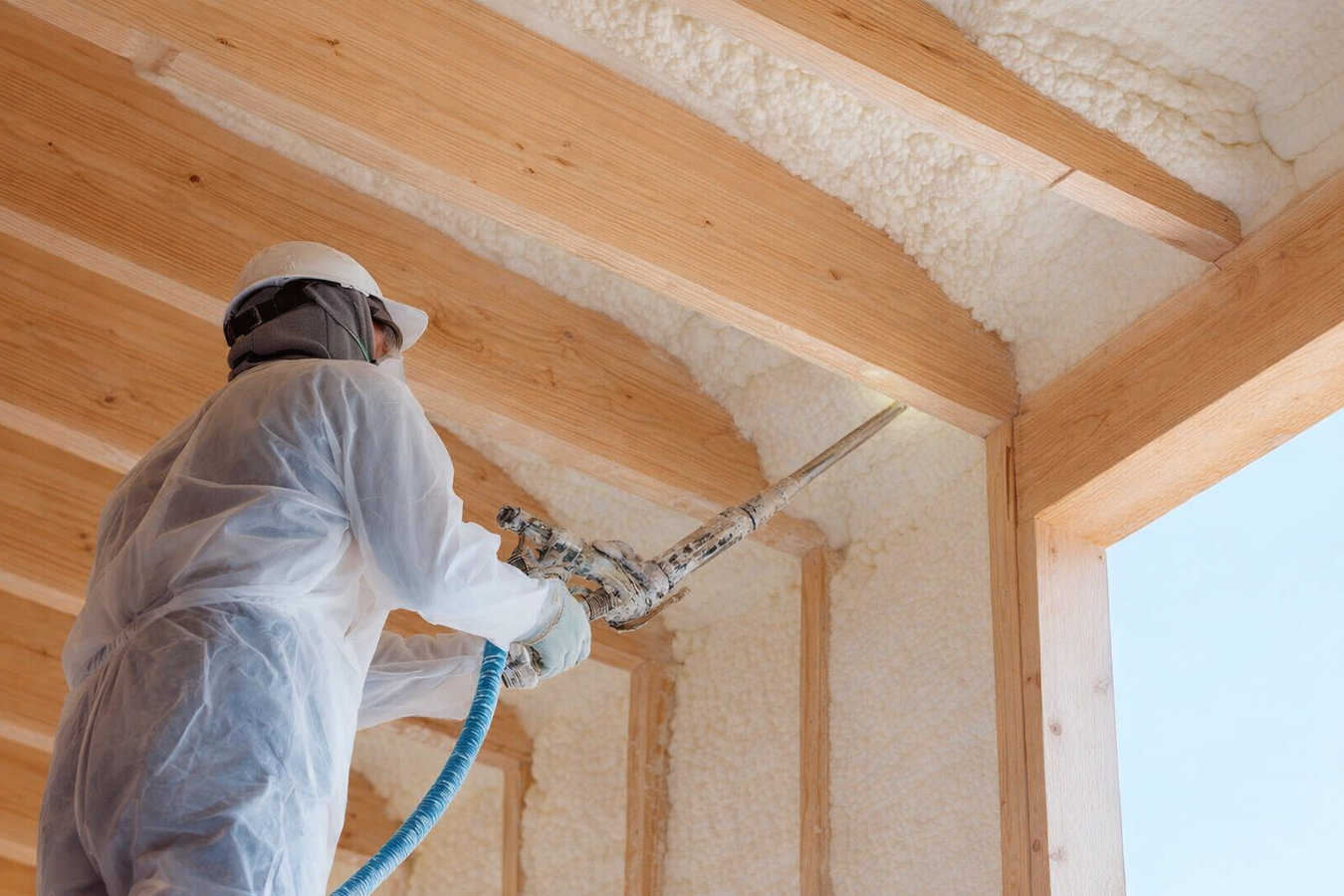
Junction City Insulation serves Manhattan homeowners and property managers with spray foam insulation, attic insulation, and crawl space moisture control. We know the Flint Hills climate and the housing stock in this city - from the older homes near Aggieville to the newer subdivisions off Kimball Avenue - and we have been doing this work since 2019.
Manhattan's persistent Kansas wind hits older homes - especially the wood-frame and brick houses near the K-State campus - hard through every season. Spray foam seals and insulates at the same time, which matters in a Flint Hills climate where air leakage through walls and rim joists can account for more energy loss than the insulation itself. Learn more about our spray foam insulation services.
The neighborhoods closest to Kansas State University include many homes built between the 1920s and 1960s that have never had an attic insulation upgrade. Adding blown-in insulation to these attics is typically the fastest way to reduce heating costs in winter and keep upstairs rooms livable through Manhattan's humid, 90-plus-degree summers.
Manhattan sits at the confluence of the Big Blue River and the Kansas River, and the rocky, shallow Flint Hills soil drains poorly on hillside lots. Crawl space insulation stops cold air from rising through floors in winter and prevents the humidity that collects under homes near low-lying areas from reaching floor joists and subfloor material.
Older Manhattan homes - particularly the brick and limestone construction common in the Aggieville area and near downtown Poyntz Avenue - can have significant air leakage through mortar joints, window frames, and attic bypasses. Air sealing addresses those pathways before new insulation is added, making the insulation itself far more effective.
Manhattan has a large share of homes hitting their 30- to 50-year mark, and many of the newer subdivisions off Kimball Avenue and in the northwest quadrant are due for their first major insulation review. Retrofit insulation updates existing cavities without a full renovation - a practical option for both owner-occupied homes and rental properties that need improvements without major disruption.
Many Manhattan homes have full basements that are used for storage, laundry, or finished living space, and an uninsulated basement is one of the most direct sources of heat loss in the building. Insulating basement walls and rim joists keeps the lowest level of the home warmer and reduces the load on the heating system above.
Manhattan sits at the eastern edge of the Flint Hills, where the geology shifts from the deep farmland soils of central Kansas to rocky, limestone-layered terrain. That shallow rock affects how water drains on residential lots - many Manhattan properties, especially on hillside streets near the university, hold water after heavy rain in ways that flat-lot homes elsewhere do not. Spring flooding along the Big Blue River and the Kaw has reached residential areas more than once, and even properties far from the river corridors can see crawl space moisture intrusion when spring rains are heavy. The freeze-thaw cycle here is aggressive: ground temperatures swing above and below freezing repeatedly from November through March, which stresses foundations and makes uninsulated crawl spaces a persistent cold-air source for the home above.
The housing mix in Manhattan creates a wide range of insulation needs. The older homes near the K-State campus were built when energy codes were minimal or nonexistent - many have original insulation that has compressed or degraded over six to eight decades. At the same time, the newer subdivisions on the north and west sides of town are now 20 to 30 years old and hitting the point where their original attic insulation and vapor barriers are due for review. Add in a large rental market driven by university students and military families from Fort Riley, and deferred maintenance is common across all parts of the city.
Our crew works throughout Manhattan regularly, and we understand the local conditions that affect insulation work here. We have been in the older brick and limestone homes near downtown Poyntz Avenue and in the vinyl-sided houses in Wildcat Creek Estates on the north side, and those two property types need different approaches. The campus-area homes often have original materials behind walls that need to be accounted for; the newer subdivisions off Kimball Avenue may look more standard but can have moisture issues tied to the rocky, poorly draining soil under their crawl spaces.
Manhattan is home to Kansas State University and the historic Aggieville district, and it is a city that holds its character while growing steadily outward. We serve property owners from the neighborhoods closest to campus all the way out to homes near Tuttle Creek Lake north of town. We also work regularly in Chapman, KS, just east along US-40, where many Manhattan-area commuters have settled.
We respond to all inquiries within one business day. When you reach us, we ask a few quick questions - home size, which areas you want addressed, and whether you have had any prior insulation work done - so we can come prepared with the right equipment and a realistic time estimate.
We inspect the attic, crawl space, basement, or walls you want addressed and take measurements before quoting anything. You receive a written estimate broken down by area and material - no vague price ranges - before any work is scheduled. The assessment step is also where we address any cost questions so you know exactly what you are agreeing to.
We give you a specific arrival window, not a broad four-hour range. Most single-area jobs are done in one day. For spray foam projects, we provide your exact re-entry time in writing before we start - no guessing about when your family and pets can return.
Before packing up, we walk you through every area that was worked on. You can see the coverage, ask questions, and flag anything that needs attention while the crew is still on-site. If something comes up in the days after we leave, call us - we will come back.
We serve homeowners, landlords, and property managers throughout Manhattan. Fill out the form or call us directly - we respond within one business day and can usually schedule an on-site assessment within the week.
(785) 209-5924Manhattan is the largest city in the Flint Hills region of Kansas, with a population of roughly 55,000 people. It is home to Kansas State University, which enrolls around 20,000 students and shapes the character of the city in ways that are visible in almost every neighborhood. The historic Aggieville district, just off campus, is one of the oldest commercial districts in Kansas. The residential neighborhoods range from century-old wood-frame and brick homes near downtown Poyntz Avenue to 1940s and 1950s homes in the established mid-town streets, to vinyl-sided subdivisions built in the 1990s through 2010s on the north and west sides of the city.
The city sits where the Big Blue River meets the Kansas River, and the terrain shifts here from the rocky, rolling Flint Hills prairie to the broader Kansas river valley. That combination of rocky soil, hilly lots, and a river corridor that has flooded historically creates a range of drainage and moisture conditions that affect how homes need to be insulated and protected. About 47 percent of Manhattan's housing units are renter-occupied, which means deferred maintenance and catch-up work are common - particularly in the properties closest to campus. We also serve homeowners in nearby Clay Center, KS, north of the city, and in Ogden, KS, the small community between Manhattan and Junction City along US-24.
Creates an airtight seal that dramatically reduces energy loss in your home.
Learn MoreFills gaps and cavities evenly for complete, consistent thermal coverage.
Learn MoreHigh-density foam delivering superior R-value and moisture resistance.
Learn MoreFlexible, sound-dampening foam ideal for interior walls and ceilings.
Learn MorePrevents moisture intrusion that causes mold, rot, and structural damage.
Learn MoreControls moisture migration to protect walls, floors, and foundations.
Learn MoreStops conditioned air from escaping through the attic floor and bypasses.
Learn MoreManhattan winters are cold and the Flint Hills wind doesn't let up - the right insulation makes a measurable difference year-round. Call us or submit a free estimate request and we will get back to you within one business day.