
Loading...
Serving Junction City, KS and surrounding areas. (785) 209-5924
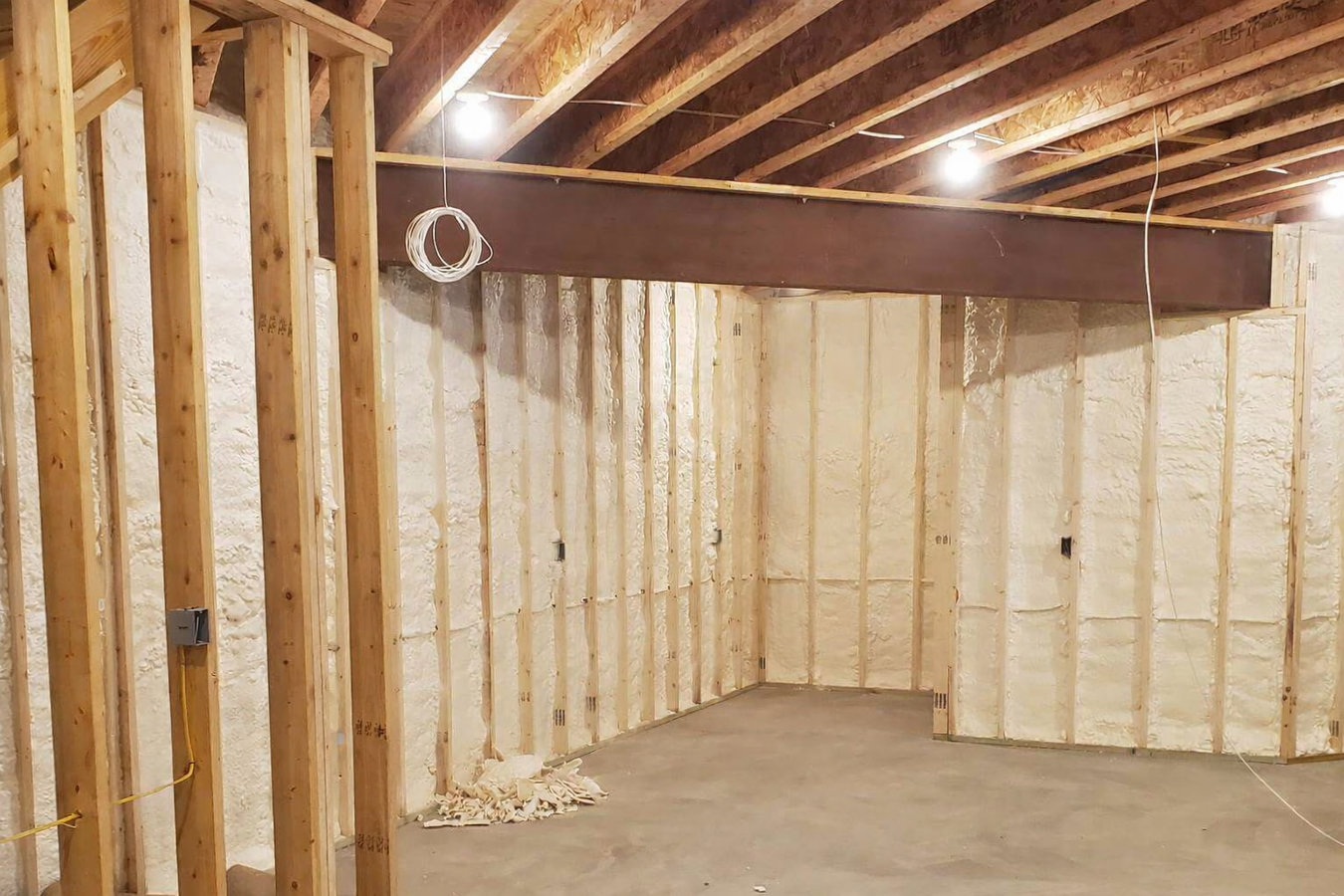
Your basement walls lose heat all winter and let heat in all summer. We install basement insulation in Junction City that stops that cycle and makes your whole home more comfortable.
Basement insulation in Junction City slows heat from escaping through your foundation walls in winter and keeps outdoor heat from pushing back in during summer, and most jobs are completed in one to two days with no major disruption to your daily routine.
If your home was built before the 1980s, there is a good chance your basement has little or no effective insulation left - original materials settle, compress, and degrade over time. Basement insulation works by creating a thermal barrier between your living space and the cold Kansas ground, so your furnace does not have to run constantly to compensate for what is leaking out below. Many homeowners also pair this work with crawl space insulation to seal the entire lower envelope of the house at once.
Established in 2019, Junction City Insulation has been helping local homeowners address basement heat loss before it shows up as another expensive utility bill. Call us or fill out the form on our contact page to schedule a free estimate.
If your utility bills have gone up noticeably but your habits have not changed, your basement is a likely culprit. Heat escapes through uninsulated foundation walls faster than almost anywhere else in the house, and in Junction City winters that loss shows up directly on your gas bill. If your furnace seems to run constantly even on moderately cold days, the basement is worth checking first.
Walk through your home on a cold January morning and pay attention to where cold air pools. If your first floor is always chilly no matter how high you set the thermostat, cold air is moving freely through your foundation walls into the space below your feet. This is especially common in Junction City homes built before the 1980s, where insulation was minimal or has degraded.
Moisture problems and insulation problems often go hand in hand. If you notice water stains on the walls, a damp smell after rain, or condensation forming on surfaces, it is worth having a contractor assess both the moisture situation and the insulation at the same time. The clay-heavy soils in Geary County put ongoing pressure on basement walls and can open small entry points for water.
If you have had a pipe freeze or come close during a hard Kansas cold snap, your basement walls are not keeping the cold out. Junction City winters can bring extended stretches of below-freezing temperatures, and an uninsulated basement leaves your plumbing vulnerable. Proper wall insulation keeps the space warm enough to protect your pipes without leaving a faucet dripping all season.
We insulate both the foundation walls and the rim joists - the framing at the very top of your foundation wall where your floor meets the foundation. These two areas together account for a large share of the heat loss in most older Junction City homes. For wall insulation, we typically use spray foam, rigid foam board, or fiberglass batt depending on the configuration of your basement. For rim joists, we almost always recommend closed-cell foam insulation because it seals air gaps and insulates in a single step with very little space required.
Whether your basement is finished, unfinished, heated, or unheated changes which approach makes the most sense. An unheated basement with no living space is usually best served by insulating the ceiling above it - the floor joist cavities - to protect the living areas without conditioning unused space. A heated or finished basement benefits most from wall insulation that keeps the entire space warm. We assess your specific setup before recommending anything and explain the tradeoffs in plain terms so you can make the decision that fits your home and your budget.
Best for finished or heated basements where the whole space needs to stay warm.
Ideal for any basement - seals the single biggest air leak in most older homes.
Best for unheated, unfinished basements where protecting living areas above is the priority.
For basements with any history of water intrusion that must be addressed before insulation goes in.
Junction City sits in a climate zone where winter temperatures regularly drop below freezing and summer heat pushes well past 90 degrees - that wide swing means your basement is working hard in both directions. A large share of Junction City homes were built in the 1940s through 1970s, long before modern energy efficiency standards required meaningful basement insulation. Many of those homes still have their original materials, which have had decades to settle, compress, or absorb moisture. If your home is in one of the older neighborhoods near downtown, there is a real chance your basement is one of the biggest sources of energy loss in the house. Homeowners in Ogden and Milford face the same conditions and often contact us after a hard winter with a spike in heating costs.
The clay-heavy soils common throughout Geary County also deserve attention before insulation goes in. Clay soil expands when wet and contracts when dry, putting ongoing pressure on basement foundation walls and sometimes opening small cracks where outside air and moisture can enter. A good contractor will look for these entry points and seal them rather than insulating over a problem. Junction City also has an active real estate market tied to Fort Riley, where buyers and renters make decisions quickly - updated basement insulation shows up as a positive on home inspection reports and in lower utility bills that you can point to with confidence.
We ask a few basic questions - basement size, whether it is finished or unfinished, and any moisture history - then set up a time to visit. We reply within one business day.
We walk your basement and look at the walls, rim joists, existing insulation, and any signs of moisture. The visit takes 30 to 60 minutes and we flag anything that needs to be resolved before insulation goes in.
You receive a clear, written quote covering the work, materials, and total cost. We explain your options in plain language - no pressure. We also confirm whether a permit is required and handle pulling it on your behalf.
Most jobs finish in a single day. Before we leave, we walk you through the finished work. If a permit was pulled, a city inspector will confirm the work meets local standards - your documentation for when you sell.
Free estimate. Written quote. No pressure. We reply within one business day.
(785) 209-5924Most of the homes we work on in Junction City were built before 1980, and older basements have specific challenges - aging block walls, settled framing, and prior moisture events. We know what to look for and how to handle it without upselling work you do not need.
Junction City's building department requires permits for certain insulation work, and we handle that process on your behalf. You get documentation that the job was done to code, which matters when you sell. A permit means a city inspector verifies the work, not just our word.
We check for active moisture and seal any cracks or entry points before insulation goes in. The clay-heavy soils in Geary County create ongoing pressure on foundation walls, and skipping this step creates mold conditions. We will not install over a problem. See guidance from the U.S. EPA on moisture and insulation at epa.gov
We have been insulating homes in Junction City and the surrounding Geary County area since 2019. Local homeowners recommend us to neighbors because we show up on time, do the work we quoted, and leave the space clean.
Every basement insulation project we take on in Junction City starts with an honest assessment and ends with a walkthrough so you know exactly what was done. That approach is how we have built a reputation worth protecting in this community.
For more on insulation performance standards, see the U.S. Department of Energy and the North American Insulation Manufacturers Association.
High-density spray foam that seals and insulates basement walls and rim joists in a single pass.
Learn MoreProtect the area under your home from cold air and ground moisture rising into your floor system.
Learn MoreJunction City winters do not wait - lock in your installation date before the cold season and start saving on heating bills right away.